ARMY OF US Armando Frezze Durand
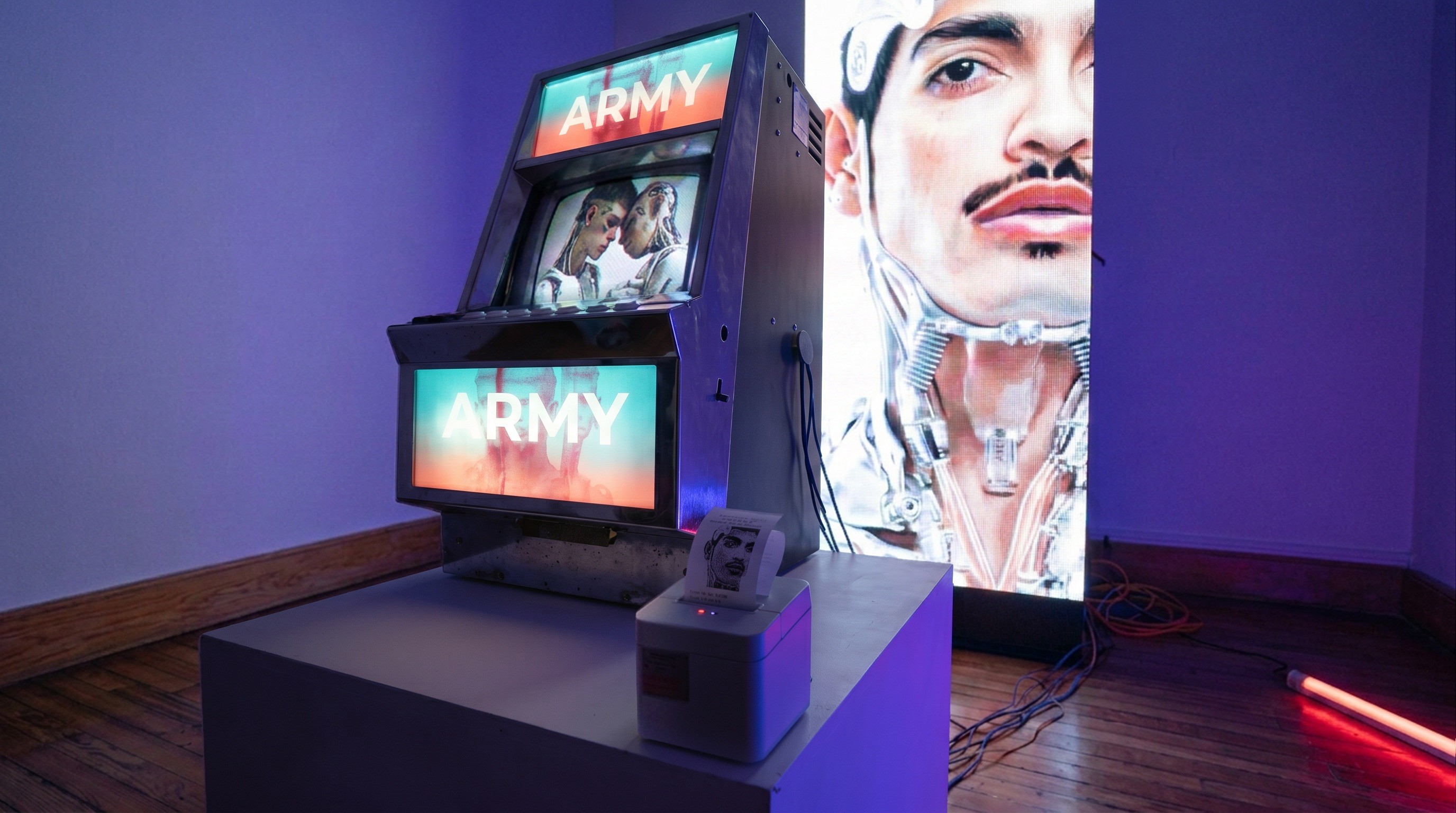
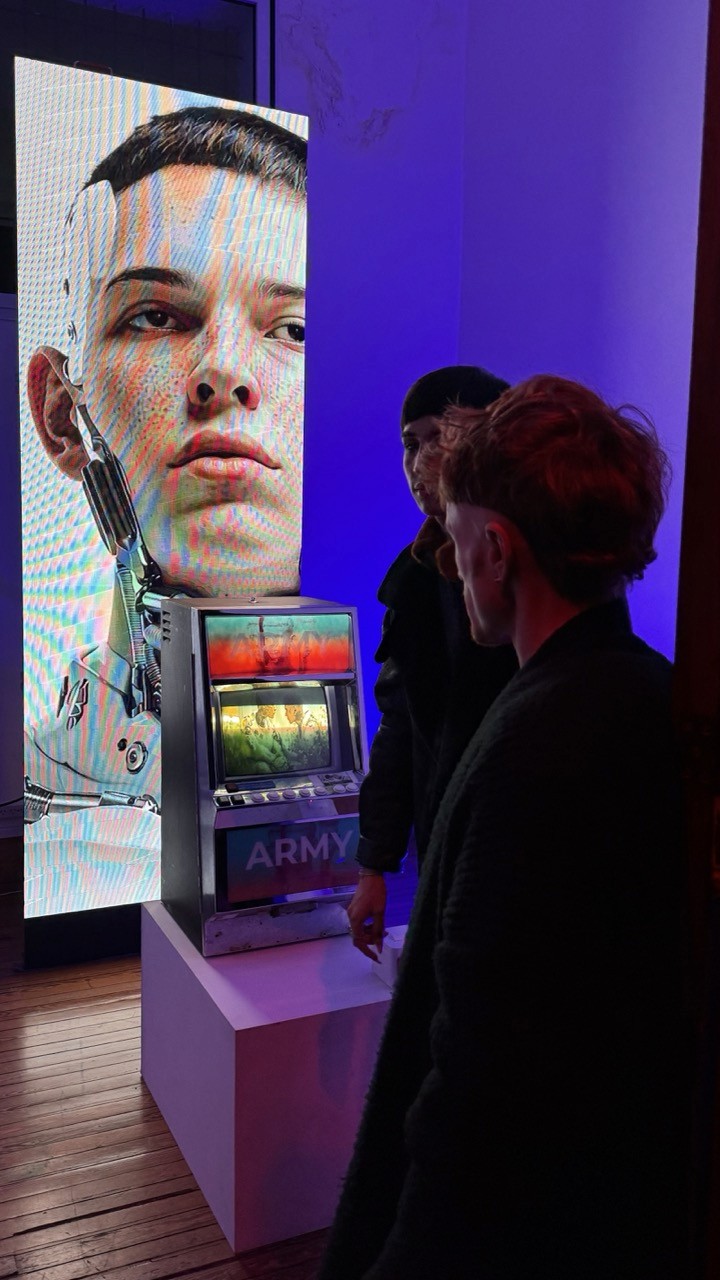
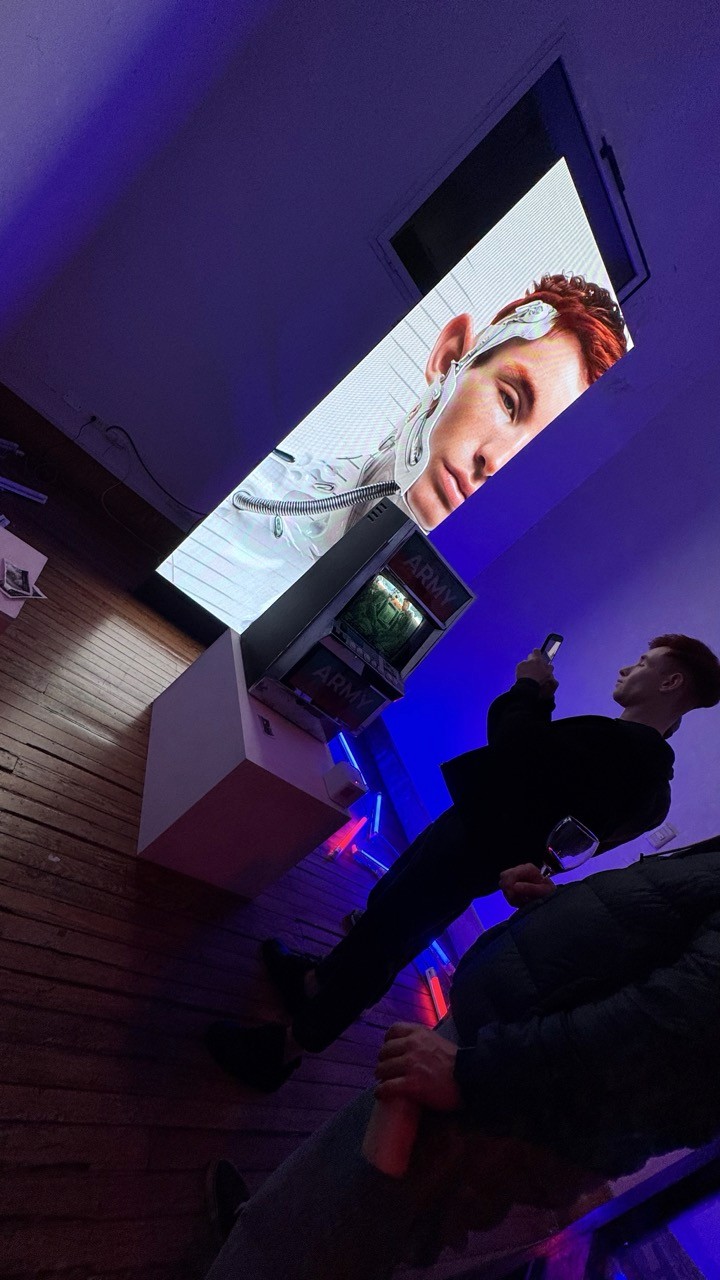
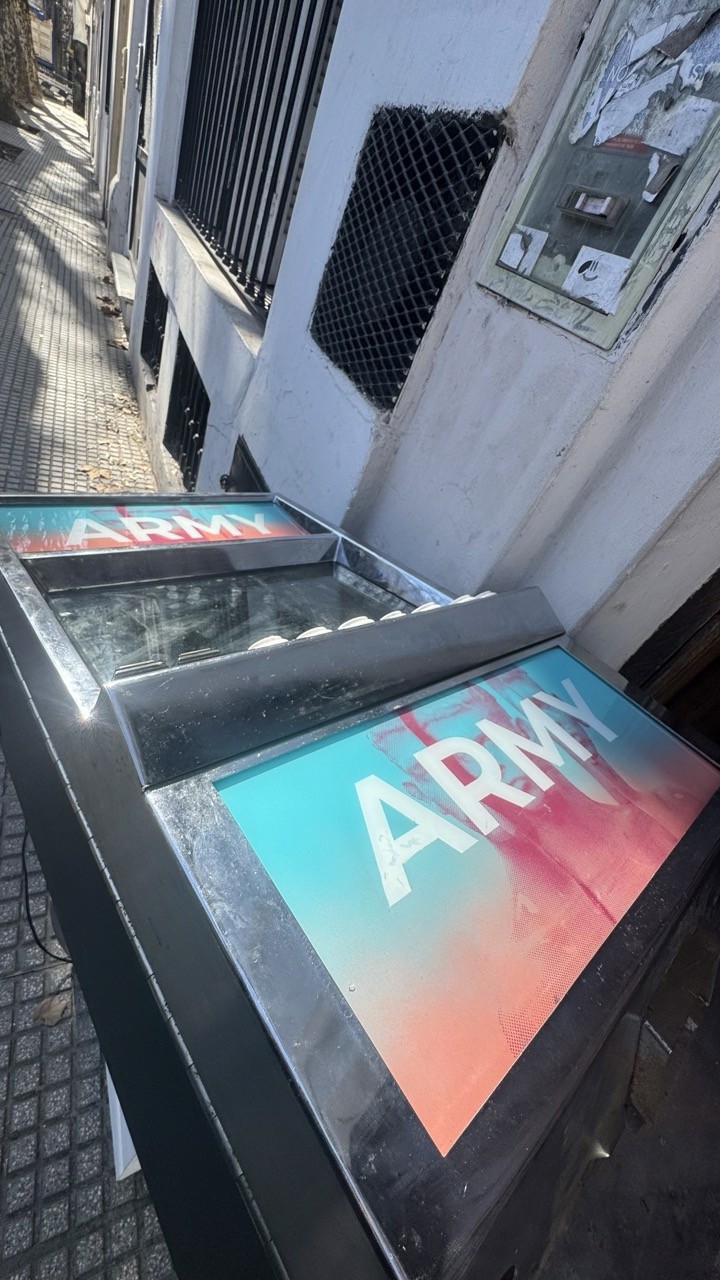
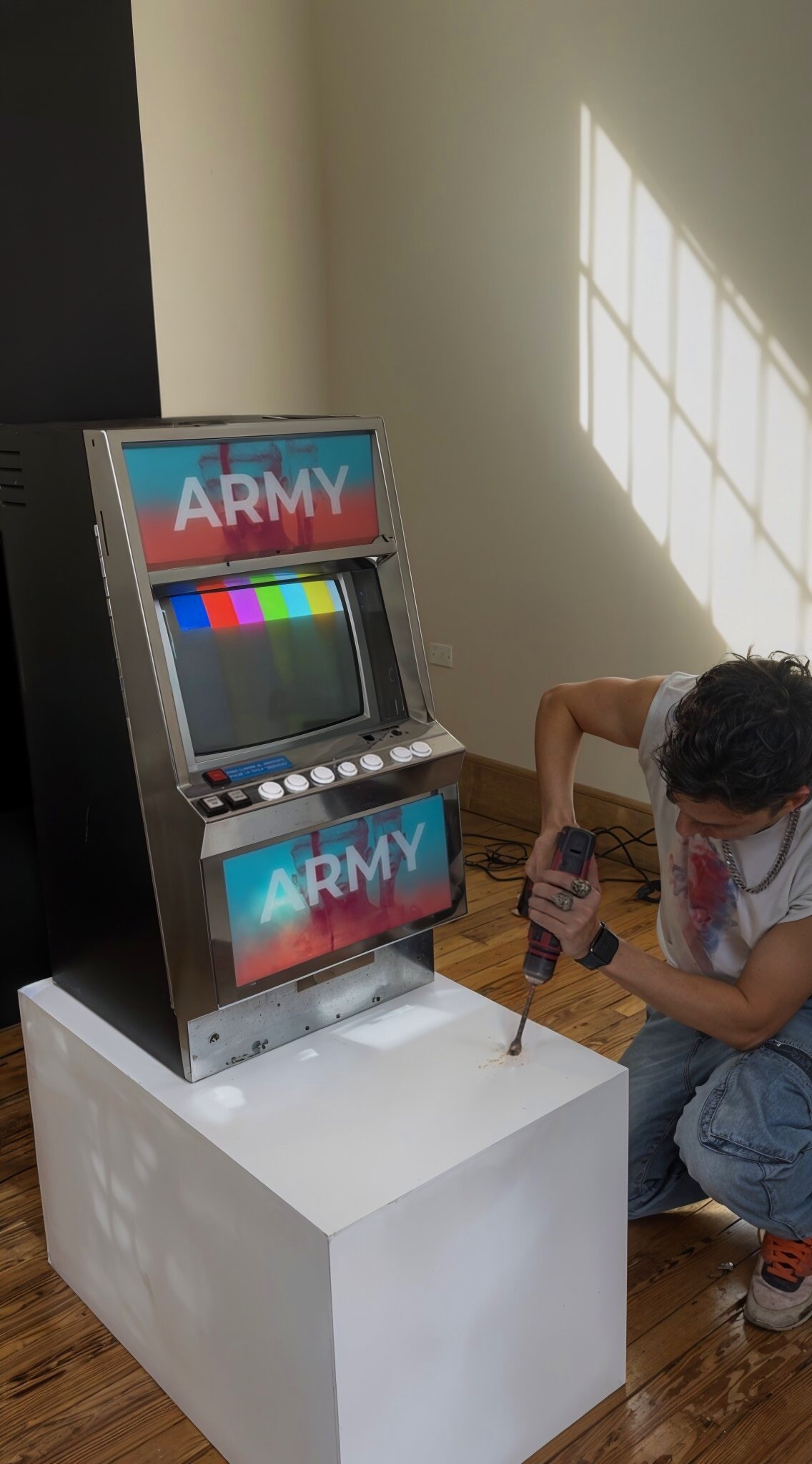
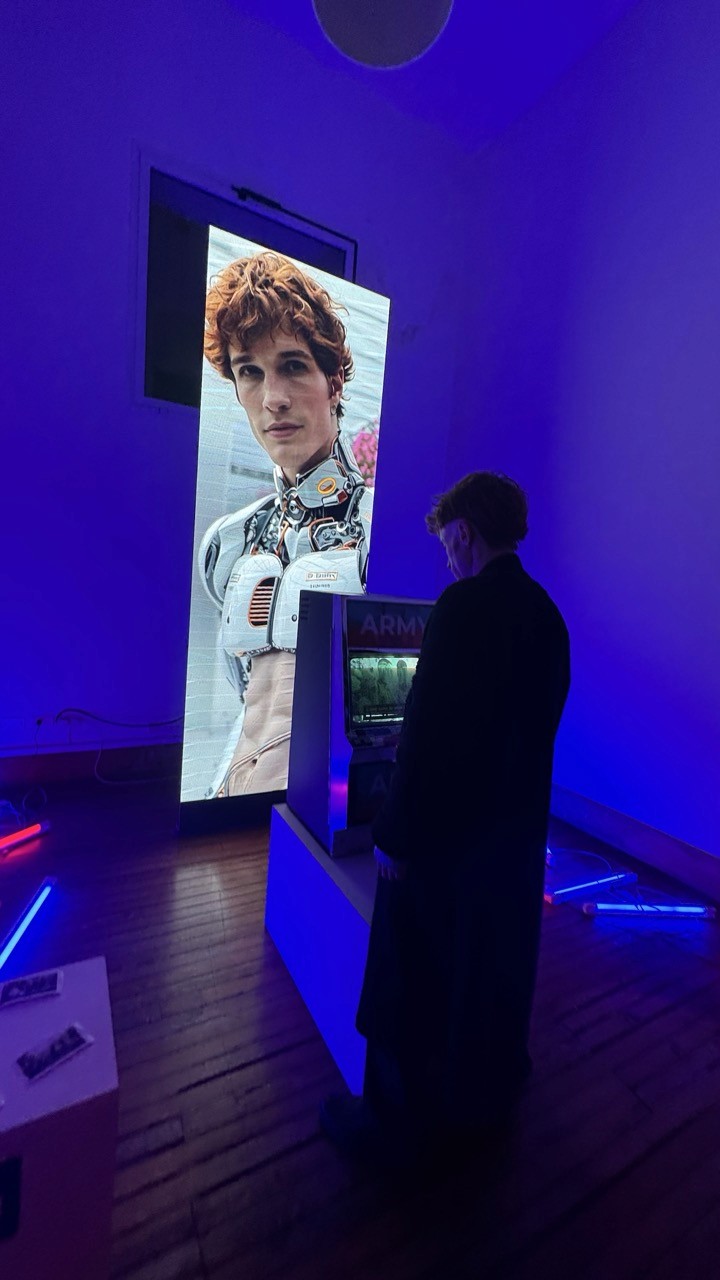
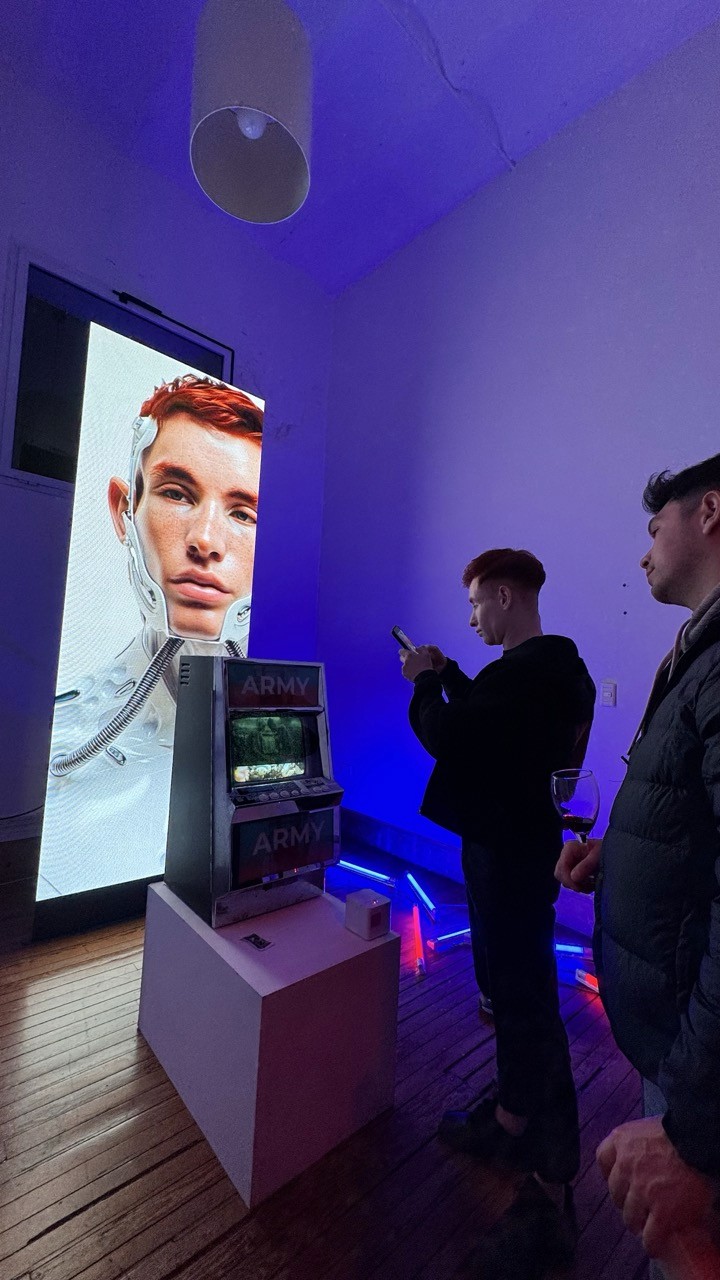
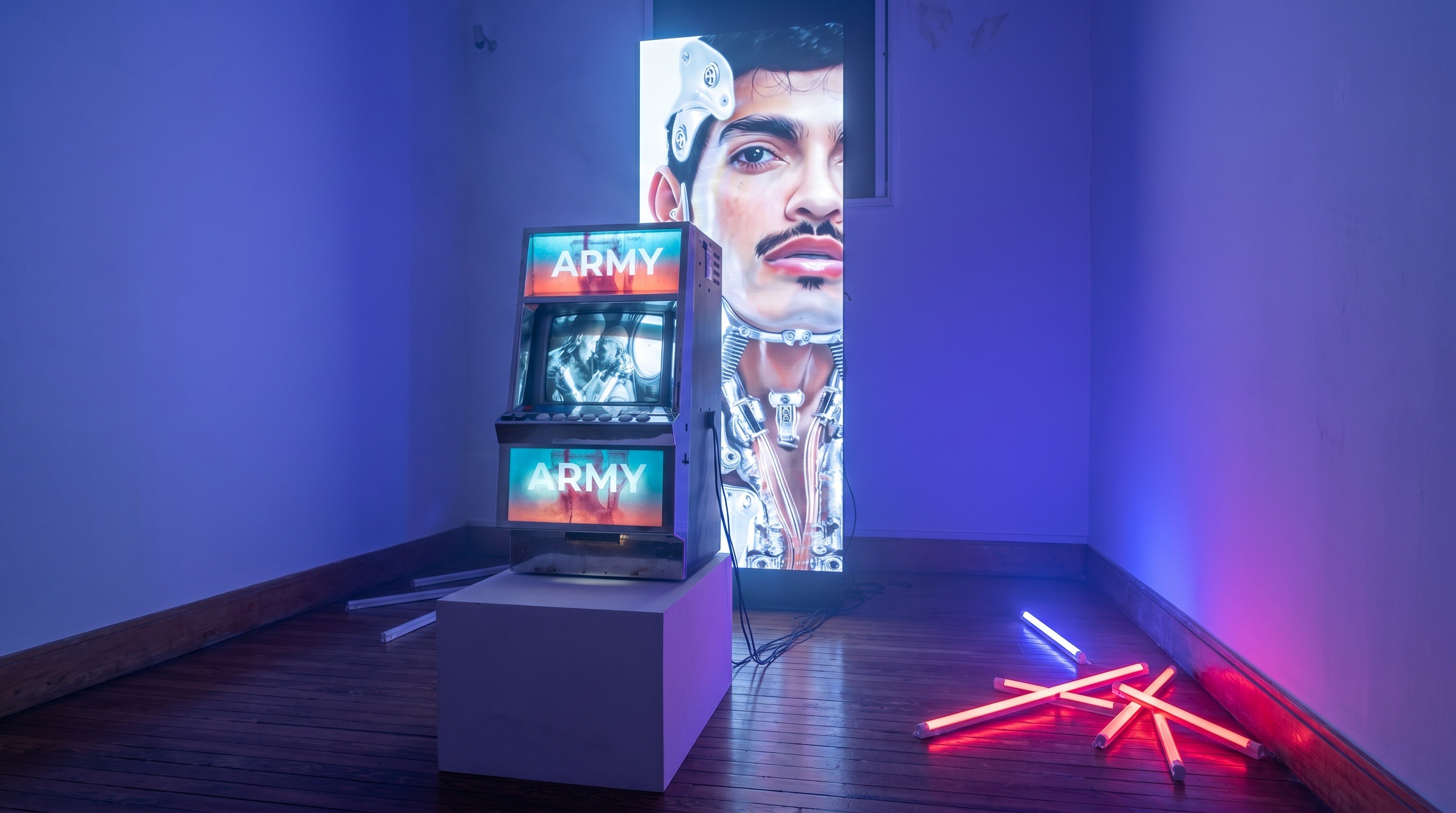
The entry point is a slot machine. Not as nostalgic reference, not as retro gesture: as a device that already contains, in its most basic logic, everything the work wants to say. The compulsion to activate. The wait for a new image. The deferred reward that always promises one more turn. In ARMY OF US, that mechanic is neither ironized nor criticized from the outside — it is inhabited. The viewer presses the button and enters an economy of images built on repetition, anxiety, and affective consumption. The machine does not simulate desire: it produces it.
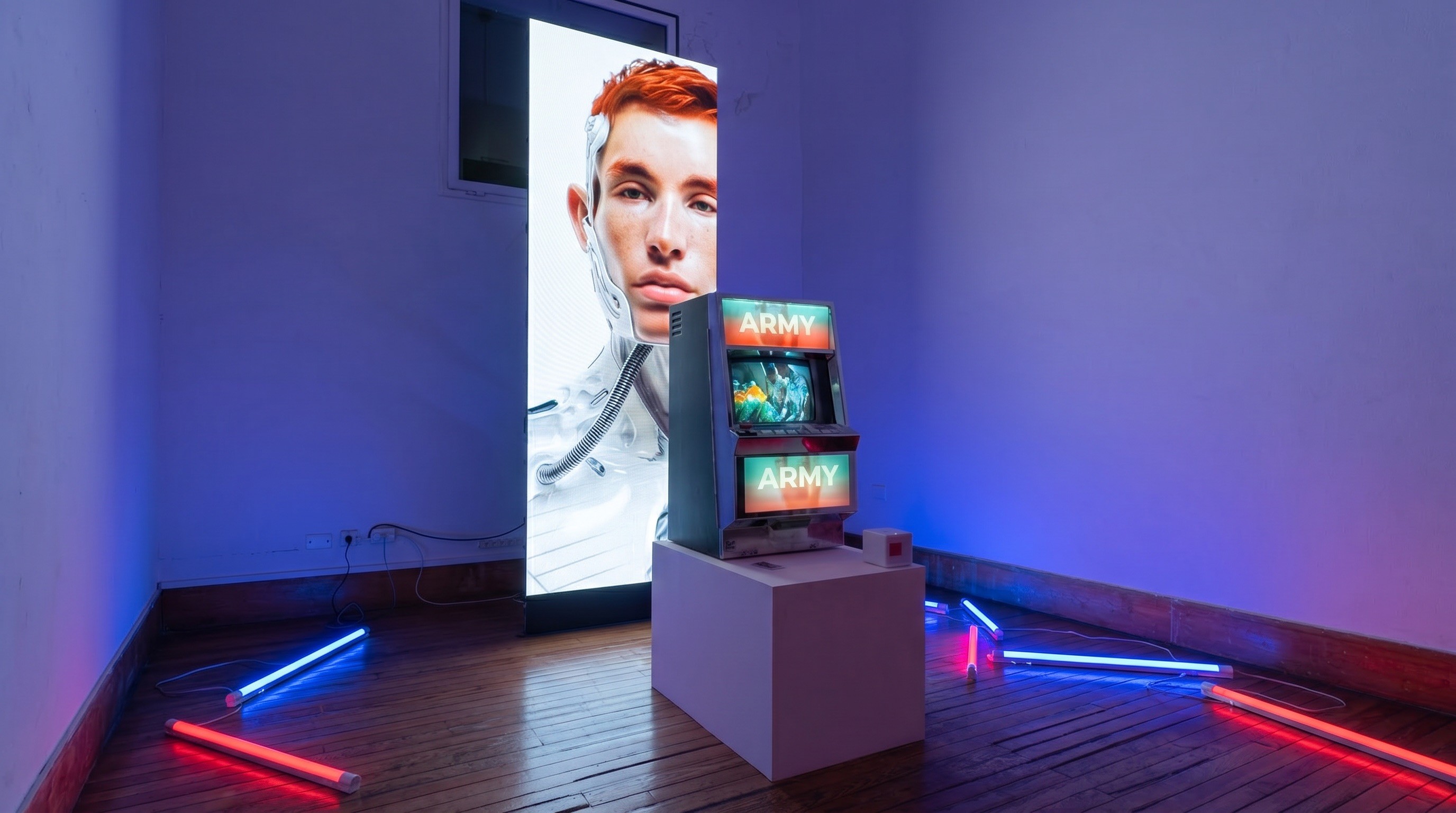
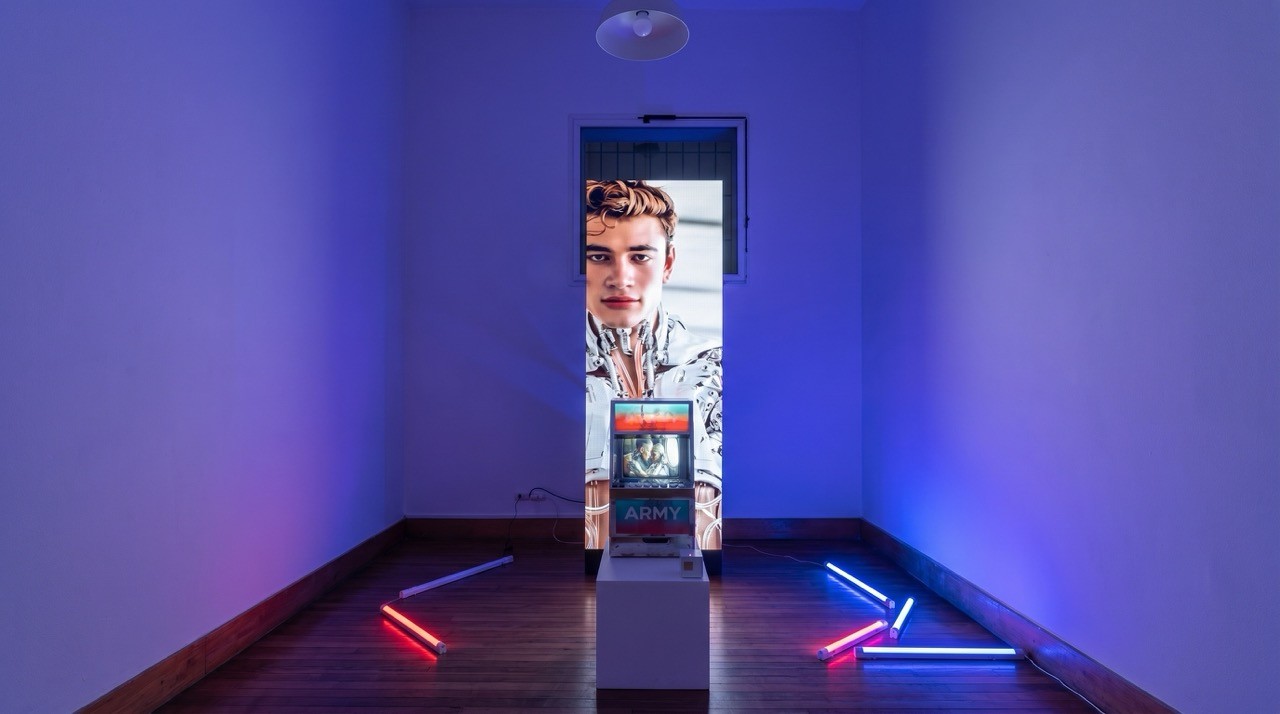
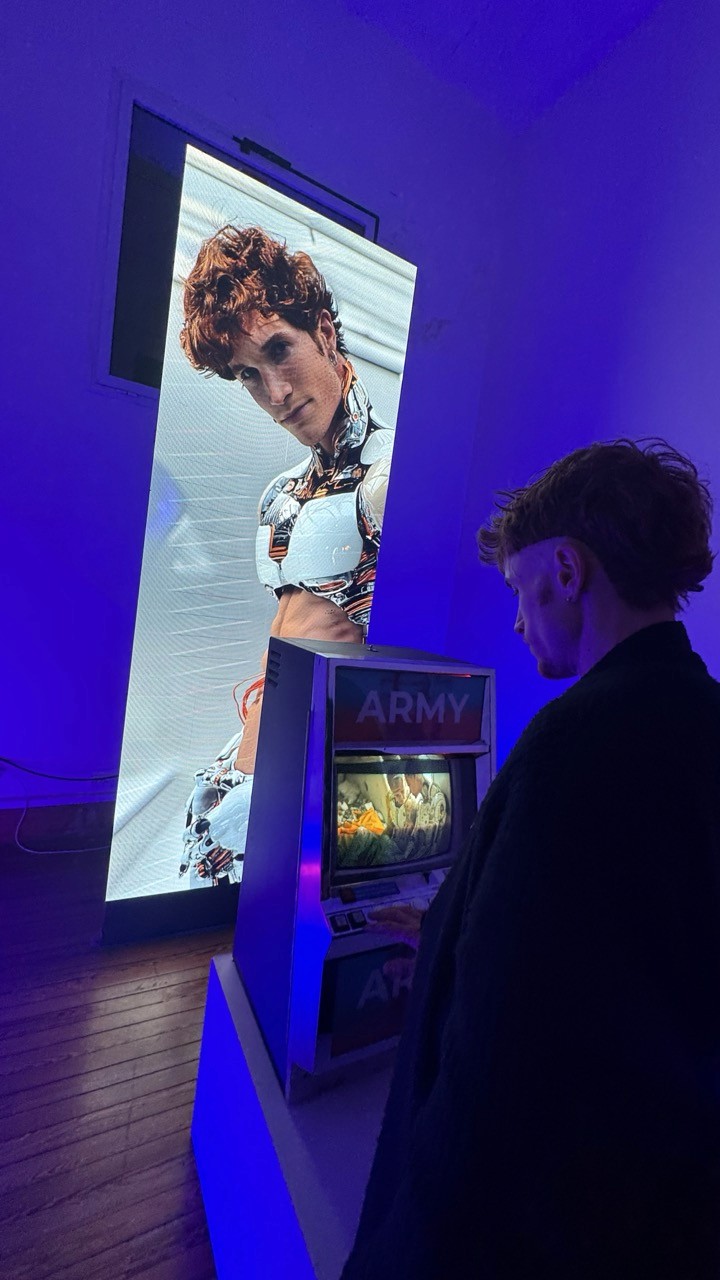
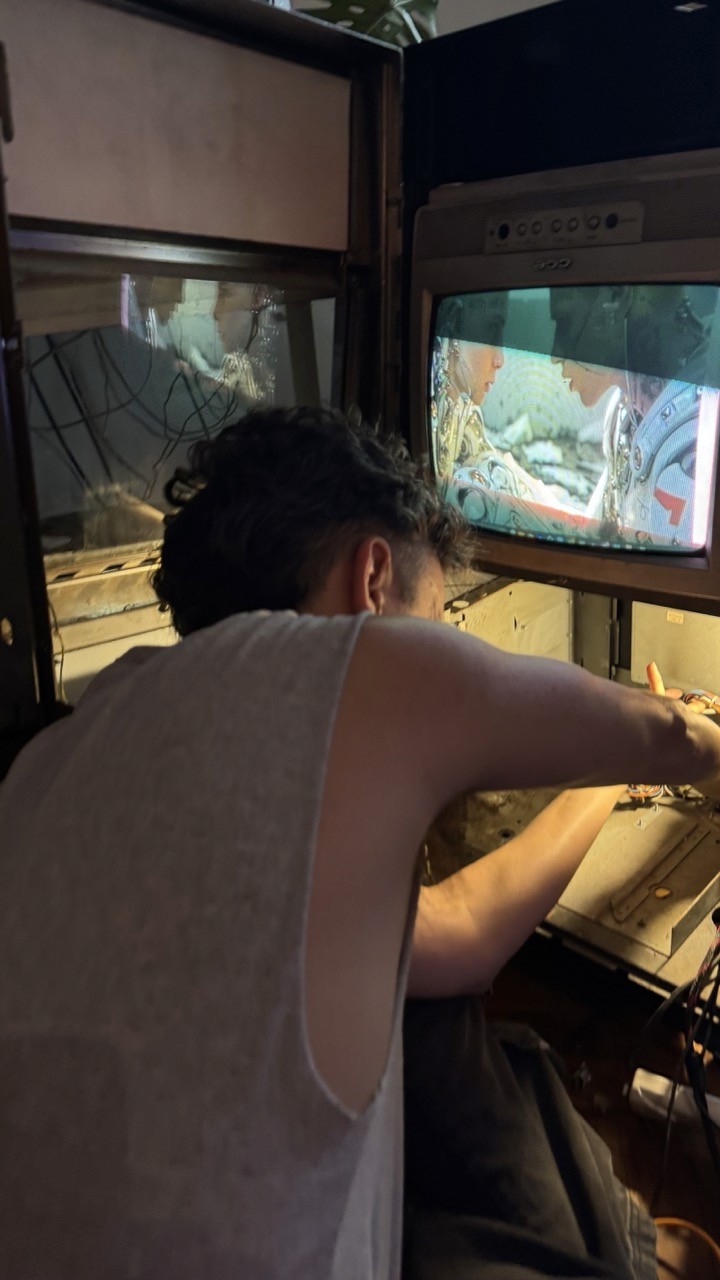
Facing the slot machine, a large-format vertical screen displays portraits of posthuman figures generated through artificial intelligence. These are not new characters: they are bodies and faces that have already appeared in previous works by the artist, now processed, reconfigured, returned to circulation in another form. The central CRT monitor plays fragmented audiovisual sequences — the language of electronic entertainment, imaginaries of simulation, affect mediated by screen. Each button triggers new scenes, new encounters, new algorithmically constructed narratives. Infinite variations of synthetic intimacy.
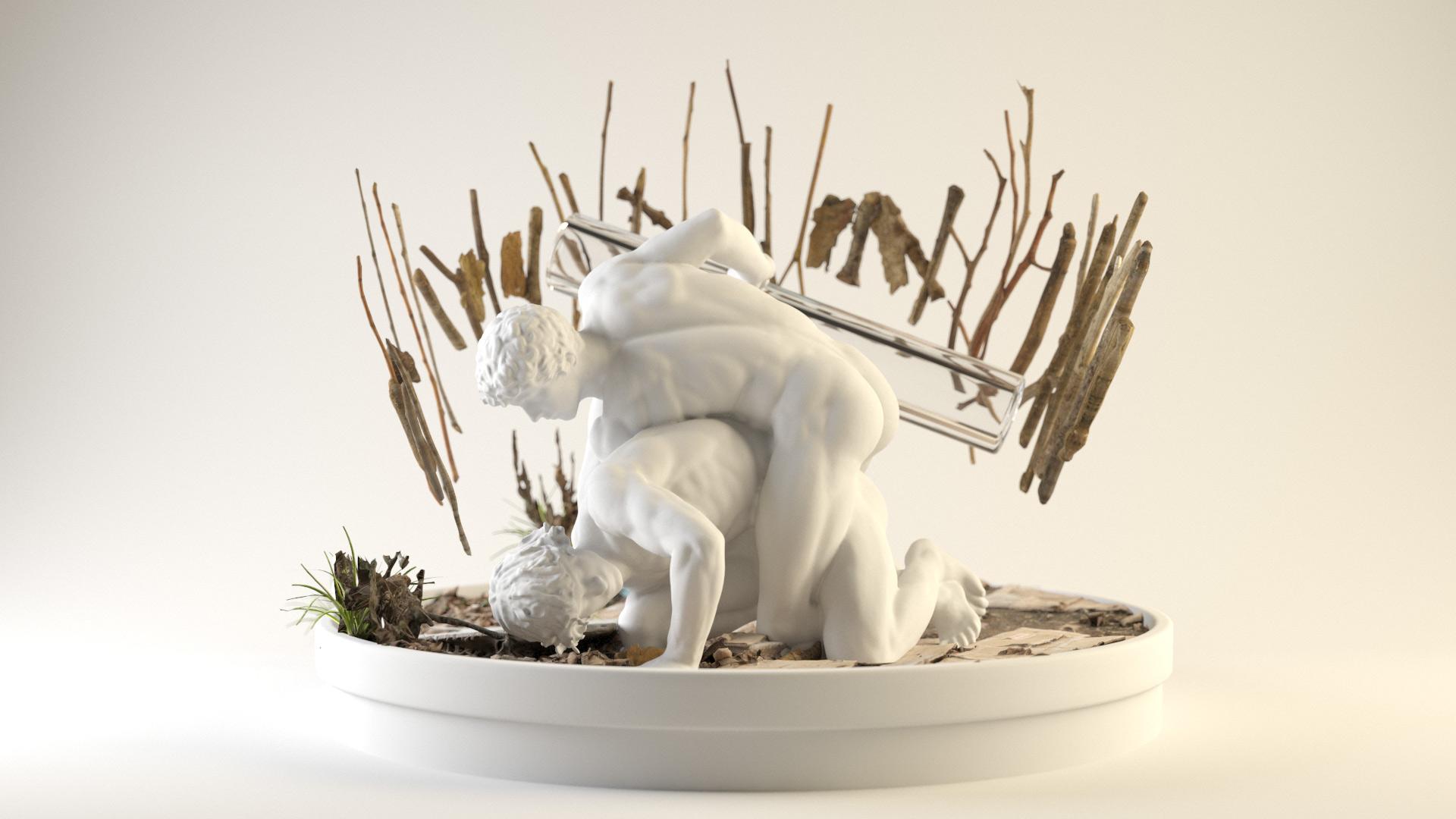
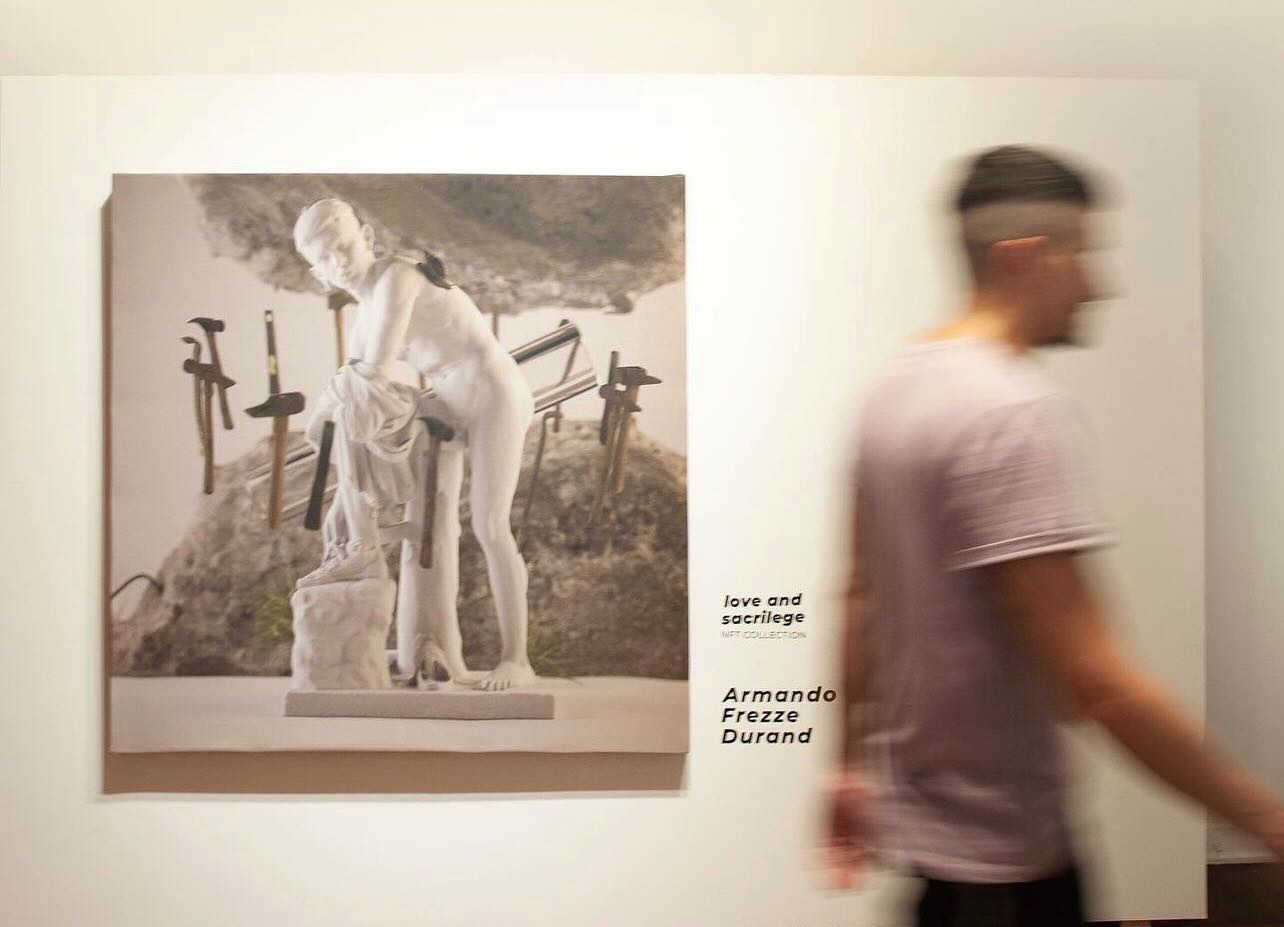
This return of the same bodies is not a formal device: it is the core of the method. In Armando Frezze Durand's practice, figures do not exhaust themselves within a single work — they migrate. They reappear transformed across different media, technologies, and materialities, as if existing in a state of permanent mutation. Photography becomes sculpture, 3D scanning becomes render, render becomes clay figure, clay figure becomes generated image. What persists is not identity but the impulse to translate it. ARMY OF US takes that logic to its most explicit form: the entire emotional and visual archive of the practice enters the machine and comes out multiplied.
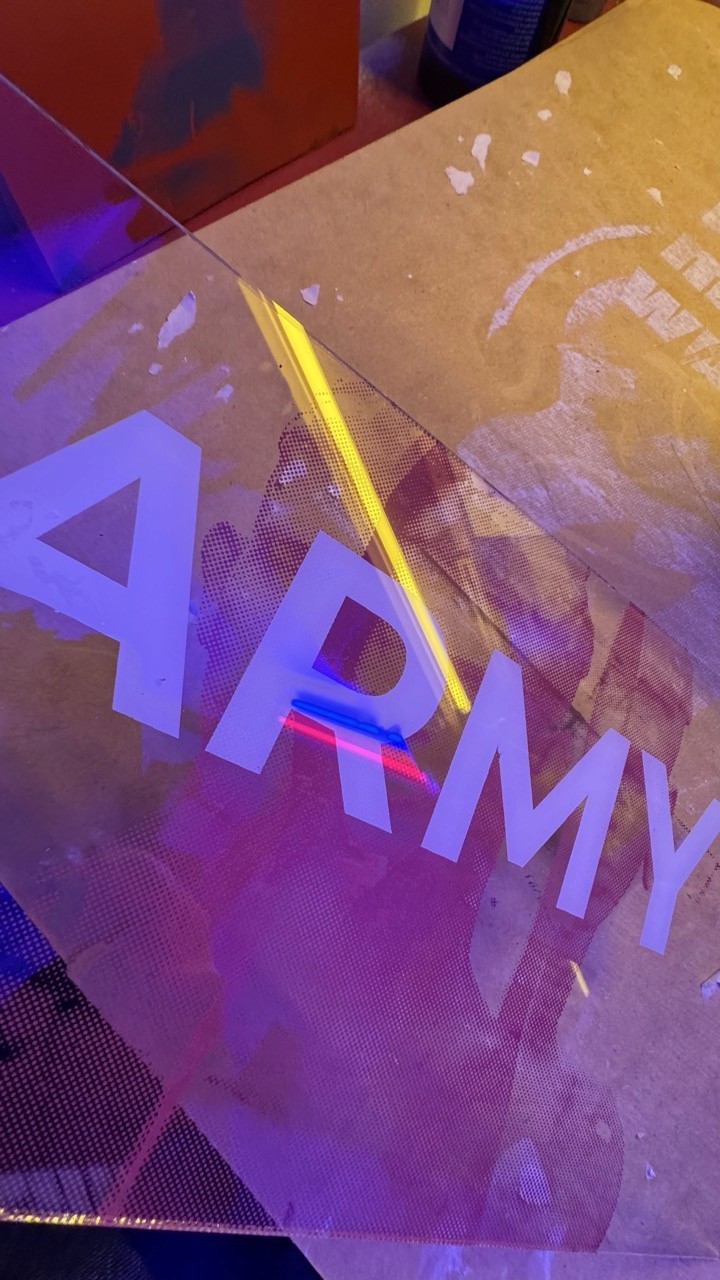
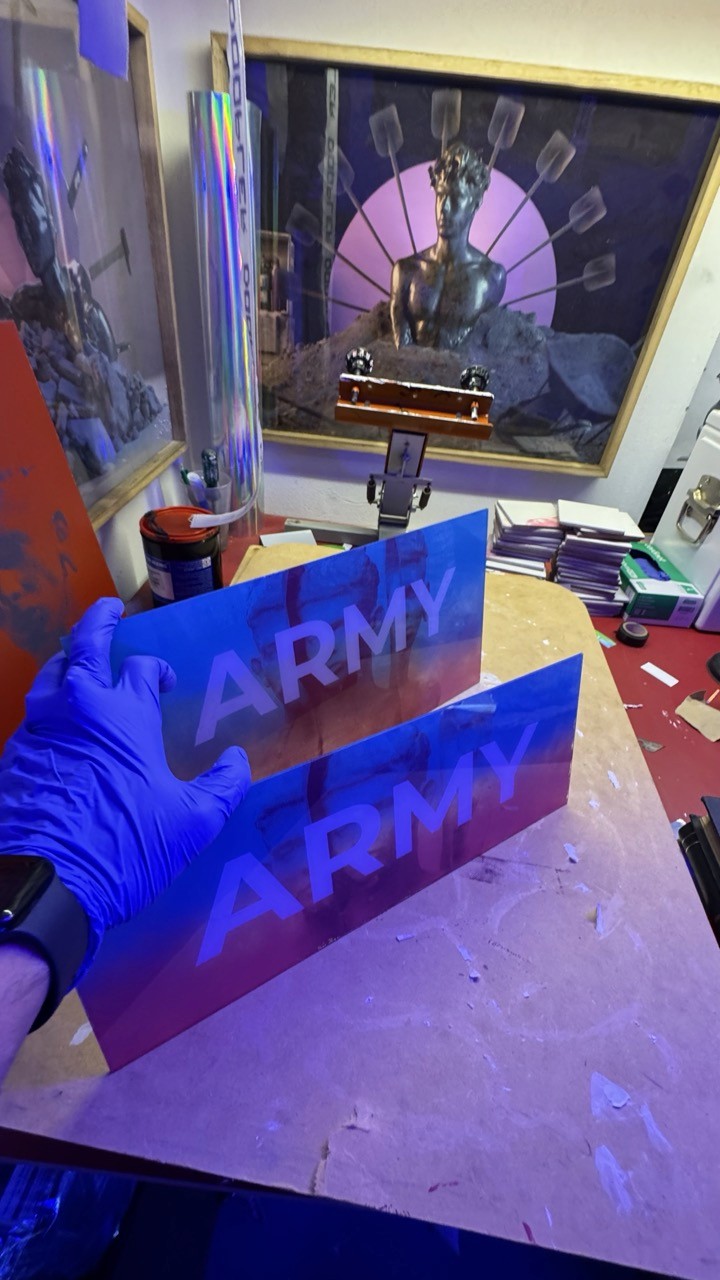
The installation combines sculpture, video art, and interactive interface. Metal, wood, CRT monitors, visible cabling, physical devices — real materials that anchor the work in a concrete, objectual dimension, in deliberate tension with the immateriality of the images it produces. The scattered LED lighting generates a cinematic atmosphere that does not point toward any possible future but toward a saturated present: one of fragmentary connections, mediated encounters, and affects that circulate through screens without ever landing in any body.
The title operates across multiple registers simultaneously. Army of Us speaks of collectivity and standardization; of community and cloning. Each face appears singular, though all belong to the same system of visual production. But the word army also belongs to the artist's own identity — embedded in the pseudonym he has used for years — and that introduces an intimate dimension that shifts the meaning. The army is not only a mass: it is a multiplication of the self. Repeated, deformed, and reconfigured versions of a single identity moving across different times, bodies, and technologies.
The thermal printer integrated into the device — a separate object, placed on the plinth — emits, when activated, a small image: low resolution, almost spectral in quality. For a few seconds the screen pauses. Then it resumes, as if nothing had happened.
The paper left in the viewer's hand is technically a souvenir. But thermal print is ephemeral by nature: it fades with heat, with light, with time. What the device offers as a possibility of retention is, in fact, the most fragile object in the space. The attempt to pause the image produces its most precarious version. The only gesture of appropriation available within the work is, from the start, a gesture of loss.
That is where ARMY OF US closes its argument: the flow cannot be stopped, only briefly interrupted. The image cannot be owned, only carried away as its printed shadow. The machine always runs again.
-
ARMY OF US Armando Frezze Durand
El punto de entrada es un tragamonedas. No como cita nostálgica ni como guiño retro: como dispositivo que ya contiene, en su lógica más básica, todo lo que la obra quiere decir. La compulsión de activar. La espera de una nueva imagen. La recompensa diferida que siempre promete una vuelta más. En ARMY OF US, esa mecánica no se ironiza ni se critica desde afuera — se habita. El espectador aprieta el botón y entra en una economía visual basada en repetición, ansiedad y consumo afectivo. La máquina no simula el deseo: lo produce.
Frente al tragamonedas, una pantalla vertical de gran formato despliega retratos de figuras posthumanas generadas mediante inteligencia artificial. No son personajes nuevos: son cuerpos y rostros que ya aparecieron en obras anteriores del artista, ahora procesados, reconfigurados, devueltos al circuito bajo otra forma. El monitor CRT central reproduce secuencias audiovisuales fragmentadas — lenguaje del entretenimiento electrónico, imaginarios de simulación, afecto mediado por pantalla. Cada botón dispara nuevas escenas, nuevos encuentros, nuevas narrativas construidas algorítmicamente. Variaciones infinitas de intimidad sintética.
Este retorno de los mismos cuerpos no es un recurso formal: es el núcleo del método. En la práctica de Armando Frezze Durand, las figuras no se agotan en una obra — migran. Reaparecen transformadas a través de distintos soportes, tecnologías y materialidades, como si existieran en un estado de mutación permanente. La fotografía se vuelve escultura, el escaneo 3D se vuelve render, el render se vuelve figura de arcilla, la figura de arcilla se vuelve imagen generada. Lo que persiste no es la identidad sino el impulso de traducirla. ARMY OF US lleva esa lógica a su versión más explícita: el archivo emocional y visual de la práctica entera entra en la máquina y sale multiplicado.
La instalación combina escultura, videoarte e interfaz interactiva. Metal, madera, monitores CRT, cableado visible, dispositivos físicos — materiales reales que anclan la obra en una dimensión objetual concreta, en tensión deliberada con la inmaterialidad de las imágenes que produce. La iluminación LED dispersa genera una atmósfera cinematográfica que no remite a ningún futuro posible sino a un presente saturado: el de los vínculos fragmentarios, los encuentros mediados, los afectos que circulan por pantallas sin terminar de aterrizar en ningún cuerpo.
El título opera en varios registros al mismo tiempo. Army of Us habla de colectividad y de estandarización; de comunidad y de clonación. Cada rostro parece singular, aunque todos forman parte de un mismo sistema de producción visual. Pero el término army también pertenece al universo identitario del artista — presente en el seudónimo que usa desde hace años — y eso introduce una dimensión íntima que desplaza el sentido. El ejército no es solo una masa: es una multiplicación del yo. Versiones reiteradas, deformadas y reconfiguradas de una misma identidad atravesando distintos tiempos, cuerpos y tecnologías.
La impresora térmica integrada en el dispositivo — un objeto aparte, situado sobre el soporte — emite, cuando se la activa, una imagen pequeña, de baja resolución, casi espectral. Durante unos segundos la pantalla se pausa. Luego retoma, como si nada hubiera ocurrido.
El papel que queda en la mano del espectador es técnicamente un souvenir. Pero la impresión térmica es efímera por naturaleza: se degrada con el calor, con la luz, con el tiempo. Lo que el dispositivo entrega como posibilidad de retención es, en realidad, el objeto más frágil del espacio. El intento de pausar la imagen produce su versión más precaria. El único gesto de apropiación disponible dentro de la obra es, desde su origen, un gesto de pérdida.
Ahí ARMY OF US cierra su argumento: no se puede detener el flujo, sólo interrumpirlo brevemente. No se puede poseer la imagen, sólo llevarse su sombra impresa. La máquina siempre vuelve a correr.
Edition:
ARMY OF US